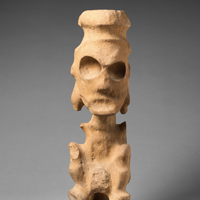
A Zemi was an ancestrial spirit acknowledged by Taíno and Carribean cultures. According to historical records, Taino religion centered around supreme god and a fertility goddess. Lesser deities are also considered zemis. The spirits of these deities were honored by caciques and chiefs. Zemis were also consulted for healing and advice. The traditional characteristics of a Zemi sculpture include bared teeth with wide open eyes. When viewing these sculptures from the front, the zemi is communicating to the viewer as a higher spirit. Side views suggest the Zemi is in a "low relief" state, wearing a woven cap and ligatures (ornaments tightly worn around the arms and legs to change their shape). The materials used to create zemis vary on the culture in question. The Dominican Republic often created zemis through wooden materials. In Taíno life, zemis played an important role. Zemis often displayed health, power, and fertility of a person. The statues were also common in the practice of sniffing chohoba. This process involves the cacique inducing vomiting, cleansing the individual.